Prince Nicholas’s presumed death
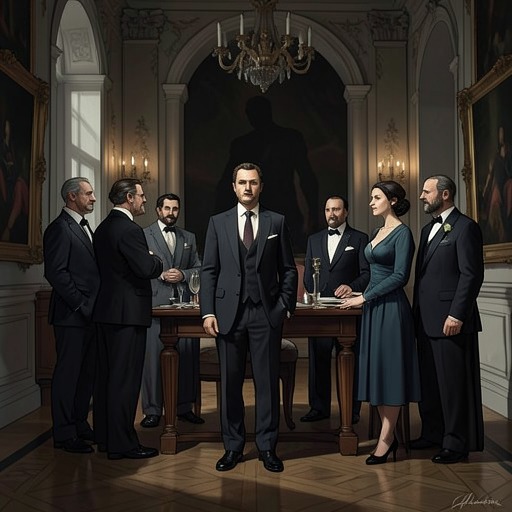
The Secret of ChimneysPrince Nicholas’s presumed death was a deliberate fabrication, not a real death: Nicholas Obolovitch had spread the report himself and used it to disappear from public view as Anthony Cade. The deception concealed a living claimant behind an ordinary assumed name, shaping both his personal history and the novel’s later revelations about identity and political succession.
The Reported Death and Its Purpose
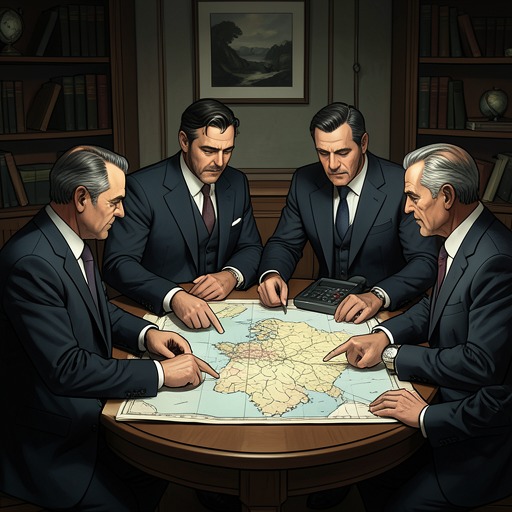
When Herman Isaacstein asked whether Nicholas could be produced, noting that he had thought the prince was killed in the Congo, Anthony answered that the report was true in one limited sense: he had caused people to believe it. He clarified that he had not killed Nicholas, but had spread the story of his death. Thus the supposed death was a public fiction, while Nicholas remained alive.
The account links the report directly to Nicholas’s change of identity. He explained that he had promised Isaacstein a prince and then identified himself as that man: Nicholas Sergius Alexander Ferdinand Obolovitch. The long royal name, he said, was unsuitable for the life he meant to lead, so he emerged from the Congo as Anthony Cade. The assumed identity was therefore not an unrelated disguise but the life made possible by the false report.
Revelation and Political Consequences
The disclosure came during a discussion of whether Isaacstein would extend the same loan terms to Nicholas that had been offered to the dead Prince Michael. Isaacstein’s question about producing Nicholas exposed the practical obstacle created by the presumed death: if the prince was believed to have died in the Congo, he could not straightforwardly appear as a claimant or negotiating partner. Anthony’s revelation overturned that assumption and made the proposed transaction newly possible.
The revelation also reinterpreted Anthony’s earlier conduct. Within twenty-four hours he had become entangled in two crimes, and he acknowledged that his handling of the first would not withstand scrutiny; he had disposed of a body and thereby obstructed justice. When recounting his story to Lord Caterham, he said he intended to tell the truth with one minor alteration and one serious omission. His explanation of the false death belongs to a wider pattern of selective disclosure, in which the truth about his identity emerges only after his actions have already complicated the investigation.
Identity, Evidence, and Suspicion
The presumed death makes identity a problem not only of names but of proof. Earlier, M. Lemoine said he had requested King Victor’s fingerprints and Bertillon measurements from France to test whether Anthony was the fugitive King Victor. That proposed comparison shows how physical records could challenge or confirm an assumed identity; Anthony’s later confession, by contrast, establishes that his own identity as Nicholas had been concealed through a deliberately circulated story.
Anthony eventually explained his silence to Superintendent Battle by saying that, until that night, he could not speak for Virginia Revel’s sake. He judged that the letters had now been proved unrelated to her and that any suspicion of her complicity had become untenable. His disclosure therefore changes more than the status of a royal claimant: it belongs to the moment when withheld facts become usable, as Anthony shifts from managing what others know to telling the detective what he believes the case requires.
Significance
The false report reverses the ordinary meaning of a death notice. Rather than ending Nicholas’s political existence, it gave him cover to adopt another name and live beyond the reach of the identity attached to his birth. The later exchange with Isaacstein turns that hidden survival into a political and financial possibility, while the name Anthony Cade—first presented as a working identity—becomes the route by which Nicholas can at last be recognized.